
Stein Eriksen: Skiing's First Superstar
“Be tough, be confident. But you will never be a whole and happy person if you aren’t humble.”
Olympic champion, gymnast, style icon, and the man throwing flips on skis long before freestyle had a name. We dig into the story of Norway's Stein Eriksen, skiing's first true superstar.
Born to Fly
Stein Eriksen was born in Oslo in 1927 into a family that was sporty to its core. His father, Marius Eriksen, was an Olympic gymnast at the 1912 Games and ran a ski shop in Oslo, where Stein's mother, Bitten, sold her hand-knitted sweaters. (More on those later.)
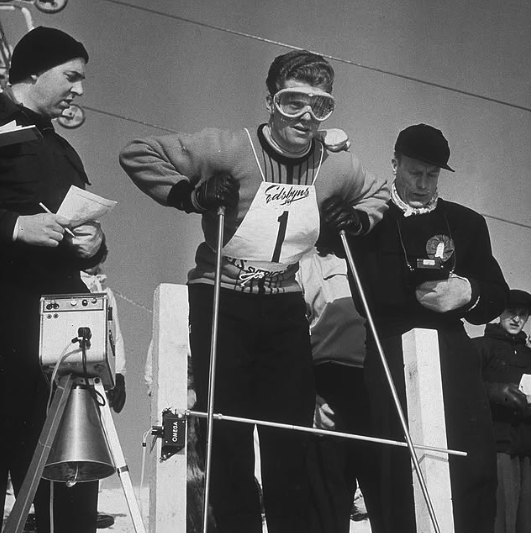
Credit: Stein Lodge
Gold on Home Snow
His first big international moment came at the 1950 World Championships in Aspen, Colorado, but it nearly all went wrong… According to the book Aspen Skiing: The First Fifty Years, 1947–1997, "Stein splintered his best pair of skis the day before the slalom." Unfazed, he raced on a borrowed pair and still finished third for the bronze.
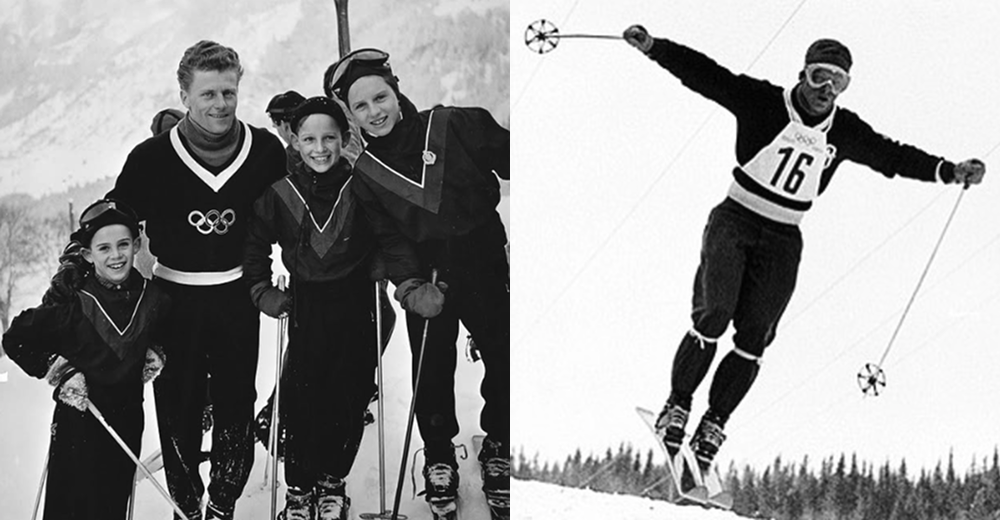
Two years later, at the 1952 Winter Olympics in Oslo, Stein delivered on home soil: gold in giant slalom and silver in slalom. That made him the first male alpine racer from outside the Alps to win Olympic gold, breaking the vice-like grip the Austrians, Swiss and French had held on the sport.
He topped his own record at the 1954 World Championships in Åre, Sweden, taking "triple gold" in slalom, giant slalom and combined. This made him the first alpine skier to win triple gold at a World Championship event.
All that success kept him firmly in the limelight. Known for his elegant "reverse shoulder" technique, he seemed to fly into each turn and come out of it even faster.
Then, at just 26, he walked away from racing. He had bigger fish to fry.
Credit: Stein Lodge
Flips, Fans and the American Dream
In 1954, Eriksen moved to the United States and became one of the best-known ski school directors in the country. He worked everywhere, from Boyne Mountain in Michigan, to Sugarbush in Vermont, Aspen, Snowmass, Heavenly, and finally Park City and Deer Valley in Utah.
Aspen Highlands owes him more than most. When Whipple Van Ness "Whip" Jones started the resort, Stein helped lay out some of the original trails. He then came aboard as its first ski school director when it opened in the 1958–59 winter, a season that drew 30,000 skier visits. Jones gave much of the credit to Stein, who by then had become, "the first great skiing superstar.”
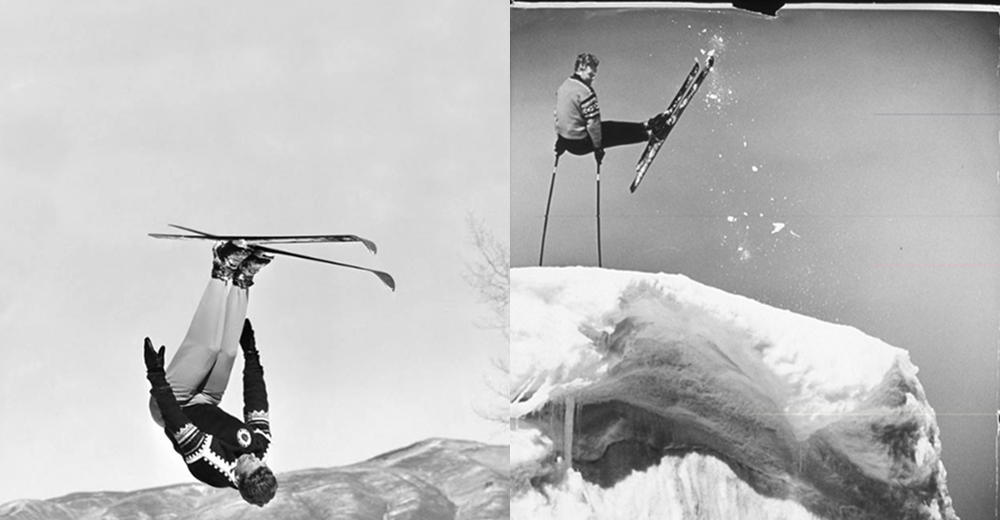
His signature move was a spectacular forward somersault: At Sugarbush it became a Sunday-afternoon spectacle. Every week he would combine his gymnastics background with his skiing and throw a flip in front of the crowds. The media loved it, and so did Hollywood's elite. It was pure showmanship, decades before "aerials" became an Olympic event, and he's widely credited as one of its earliest pioneers.
Credit: Stein Lodge
The Sweater That Launched a Thousand Knits
Handsome, charismatic and effortlessly stylish, Stein made skiing look glamorous. Nothing says it better than the famous Marius sweater. The pattern, designed by Unn Søiland in 1953, was named after and made famous by Stein's older brother Marius Jr., but it was Stein who carried it down mountains across America. His mother knitted and sold the sweaters in the family shop, and photo after photo shows Stein carving in that bold Nordic pattern. Seventy years on, you'll still spot it on every chairlift from Oslo to Utah.
A Legacy at Deer Valley
The honours kept coming long after the racing stopped. At the 2002 Winter Olympics in Utah, 50 years after his Oslo medals, Stein served as an Olympic Ambassador. He was inducted into the Ski Hall of Fame in 2003 and the Professional Ski Instructors of America (PSIA) Hall of Fame in 2013. In 2015 he received a Lifetime Achievement Award from the Utah Sports Commission and the World Ski Awards' Outstanding Contribution to Ski Tourism.
Stein Eriksen died in Park City in December 2015, just 16 days after his 88th birthday. His name lives on at the Stein Eriksen Lodge at Deer Valley, and in every skier who's ever tried (and perhaps failed) to look that good in a knit!