
Toni Sailer: ‘The Blitz from Kitz’
Credit: Olympics.com \ Toni Sailer \ WikiCommons \ Tirol.Orf
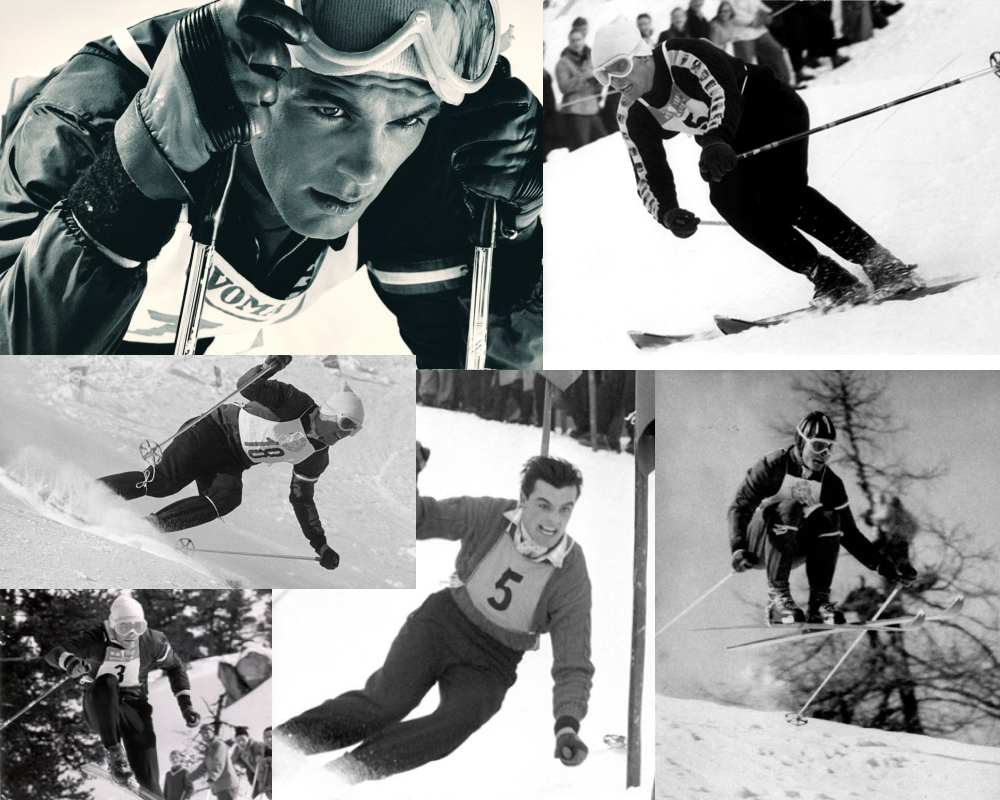
A borrowed binding strap, a white pointed hat, and three Olympic golds before his 21st birthday. We dig into the story of Toni Sailer: the Kitzbühel kid who made the rest of the field look like they were standing still.
A Kitzbühel Kid
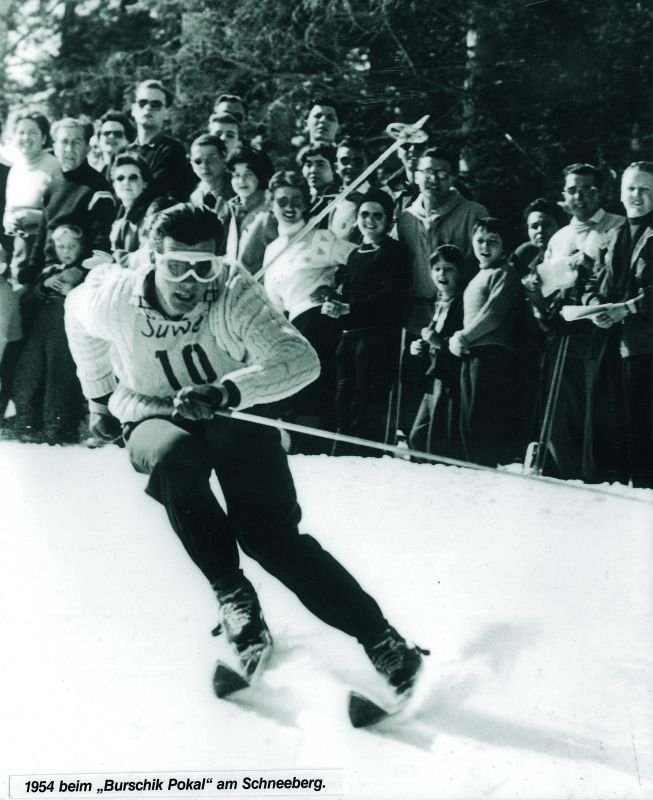
Anton "Toni" Sailer was born in Kitzbühel, Austria, in 1935. Growing up around his father's glass shop at the foot of the Hahnenkamm, home of the most feared downhill on the circuit, he slipped away with his skis whenever the snow came. He won his first race at 11, and the prize was two sausages. The rewards soon improved. At 16 he won the downhill and combined at the Grand Prix de Megève, his first international victory, and took home a refrigerator. "You can't imagine what that meant to us in that difficult after-war period," he later said.
In January 1956 he swept both the downhill and the slalom at the Hahnenkamm races on his home hill. Not a bad warm-up for what came next.
Credit: International Skiing History Association
Cortina 1956: Three for Three
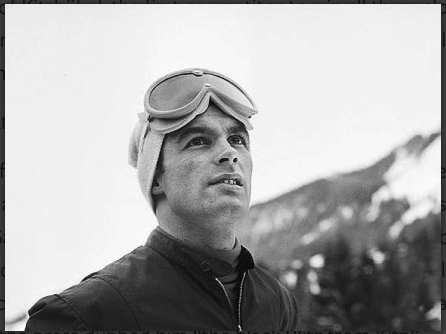
At the Cortina d'Ampezzo Winter Olympics, Sailer was a 20-year-old freshly qualified glazier and plumber. He left as the first man to win all three alpine events at a single Games.
And the margins were outrageous.
Giant slalom: won by 6.2 seconds over his teammate (and fellow Kitzbüheler) Anderl Molterer, a gap never seen before at the Olympics.
Slalom: won by 4.2 seconds.
Downhill: won by 3.5 seconds.
The downhill almost didn't happen. Before the race, Sailer's long binding strap snapped. Italian coach Hans Senger stepped in and gave him a replacement. Sportsmanship at its finest, and a decision the Italian team may have regretted about three minutes later, when Sailer crossed the line in 2:52.2.
Credit: Toni Sailer
Lights, Camera… Skis!
The "Blitz aus Kitz" (the lightning bolt from Kitzbühel) kept winning, taking three golds and a silver at the 1958 World Championships in Bad Gastein. But Hollywood-handsome, with an easy grin, he was never going to stay on the slopes for long. Film studios came calling, and Sailer went on to appear in around 18 films, mostly light musical comedies and often set on skis, and to record 18 albums as a singer. The plots were forgettable. The ski footage is not.
That was a problem in an era of strict amateurism. Payment for acting (and skiing) on screen sparked a row over his amateur status, and in 1959, at just 23, he retired from racing. Imagine what the record books might look like if he'd stuck around.
A Life on the Mountain
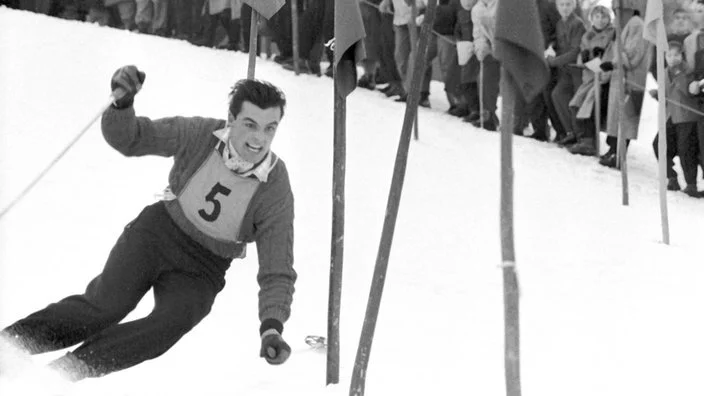
Retirement didn't mean hanging up the skis. Sailer worked as a ski school director, and in the 1960s and 70s he ran a summer ski camp at Whistler in Canada. From 1972 to 1976 he was technical director of the Austrian ski team, the era that produced a young Franz Klammer, who won Olympic downhill gold at Innsbruck in 1976. Klammer knew exactly who he was following: "As a small boy, I wanted to be just like him." Back home, Sailer was chief of race at the Hahnenkamm for 20 years, until he stepped down in 2006.
Toni Sailer died of cancer in Innsbruck in 2009, aged 73, and was laid to rest in Kitzbühel. He was fast, stylish and endlessly charming: skiing's first leading man, and still the benchmark for a clean sweep. Toni, we salute you!